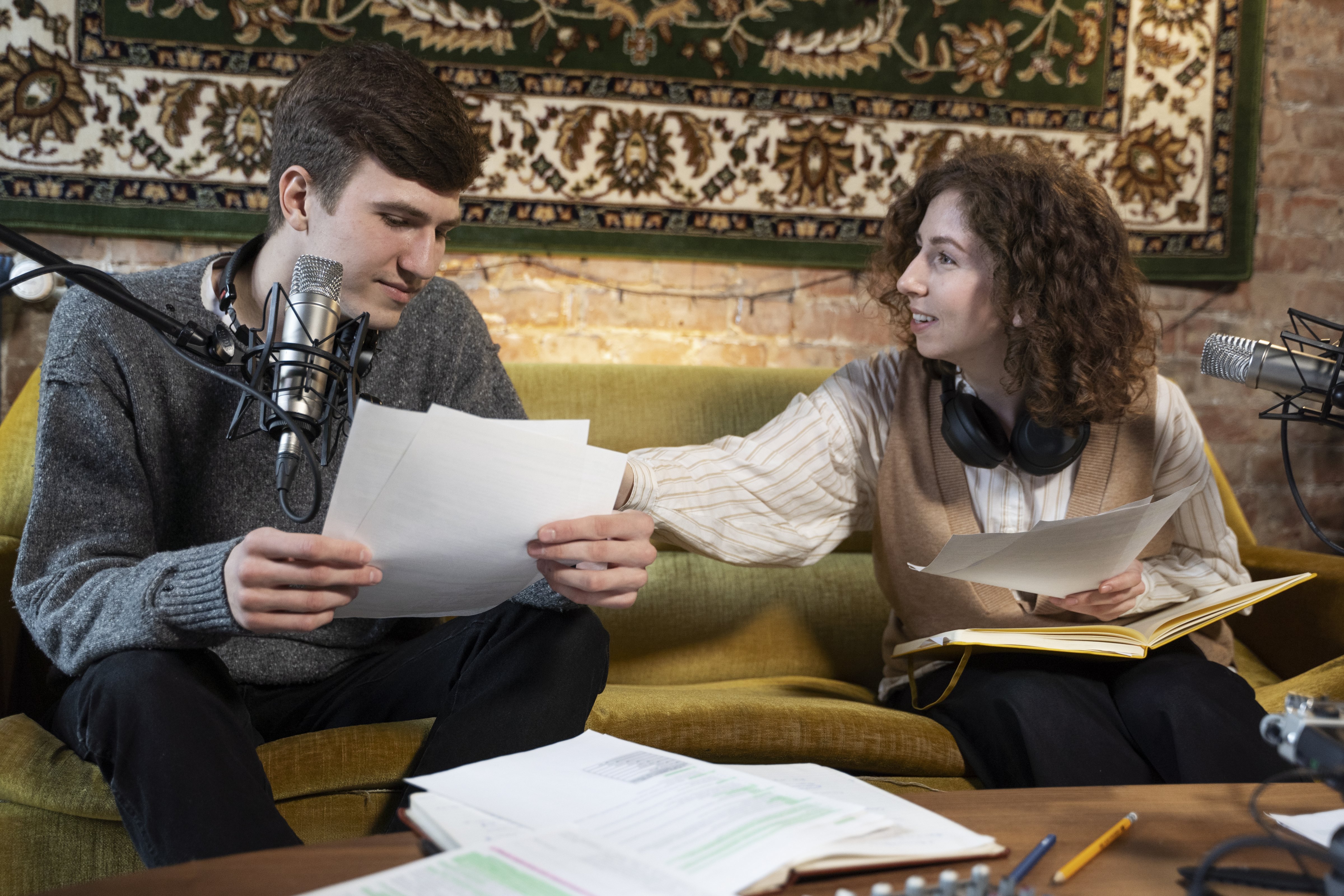
The e-learning revolution has transformed how millions of students across India access education. Yet, a critical gap remains: quality educational content in Hindi that is accessible, engaging, and scalable. Hindi text to speech technology is bridging this gap, empowering educators and institutions to create world-class learning experiences in the language that 600 million people call their own.
From rural classrooms to metropolitan coaching centers, from government skill development programs to premium ed-tech platforms, hindi tts is democratizing education by making content creation faster, more affordable, and infinitely more accessible. Whether you're developing online learning hindi courses or creating study material audio hindi resources, text to speech hindi solutions are transforming the educational landscape.
Signup on tabbly at: https://www.tabbly.io/auth/login
Why Hindi Text to Speech Matters in Indian Education?
India's linguistic diversity is both its strength and its challenge. While English dominates higher education and professional training, the vast majority of learners are more comfortable with Hindi. This creates several pressing challenges when it comes to hindi course creation and accessible education hindi initiatives:
The Accessibility Crisis: Students with visual impairments, dyslexia, or reading difficulties often struggle with text-heavy materials. Audio content opens doors that traditional textbooks cannot, making educational content hindi more inclusive.
The Cost Barrier: Hiring professional voice artists for educational voiceover hindi can cost ₹2,000-8,000 per hour of finished audio. For institutions creating hundreds of hours of content, this becomes prohibitively expensive.
The Speed Problem: Recording, editing, and finalizing audio content takes weeks. In fast-paced educational environments where curricula change frequently, this delay is unacceptable for digital learning hindi platforms.
The Quality Challenge: Maintaining consistent voice quality, energy, and clarity across long educational sessions is difficult even for professional narrators.
Hindi text to speech solves all these challenges simultaneously, offering a scalable, affordable, and consistent solution for educational content creation. Modern hindi tts elearning solutions provide the quality and flexibility that educational institutions need.

The Learning Science Behind Audio Education
Before diving into implementation, it's worth understanding why audio content is so effective for learning:
Dual Coding Theory: When students receive information through both visual and auditory channels, they encode it in multiple ways, significantly improving recall and understanding.
Cognitive Load Management: Listening to explanations while viewing diagrams or animations reduces cognitive overload compared to reading dense text while trying to understand complex visuals.
Accessibility for All: Audio content doesn't just help students with disabilities it benefits everyone by providing an alternative learning pathway that suits different situations and preferences.
Attention and Engagement: The human voice (even synthetic) is more engaging than silent reading, helping maintain student focus during long study sessions.
Transformative Applications in Educational Settings
K-12 School Education
Schools across India are leveraging hindi tts for learning to enhance their teaching methodologies and create engaging study material hindi content:
- Textbook Companions: NCERT textbooks and state board materials are being converted to audio format using hindi educational audio technology, allowing students to listen to chapters during commutes, revision sessions, or as they follow along with physical books.
- Supplementary Learning Materials: Teachers create audio explanations for difficult concepts, practice problems, and revision notes that students can access repeatedly until concepts click. This text to speech education approach makes learning more flexible.
- Homework Support: Audio instructions for assignments ensure that all students, regardless of reading ability, understand what's expected of them.
- Storytelling and Literature: Hindi stories, poems, and literary texts come alive when narrated using hindi language education tools, fostering a love for language and literature among young learners.
Competitive Exam Preparation
The competitive exam sector in India is massive, with millions preparing for UPSC, SSC, banking, railways, and state services. Hindi text to speech is revolutionizing this space with specialized elearning voiceover hindi solutions:
- Daily Current Affairs: Coaching institutes produce daily audio briefings of current events using hindi tts api education systems, allowing aspirants to stay updated during their commute or exercise routines.
- Concept Lectures: Complex topics in history, geography, polity, and economics are explained through audio lectures created with hindi online courses technology that students can replay until they fully grasp the material.
- Previous Year Questions: Audio explanations of solved papers help students understand problem-solving approaches in a more engaging format than written solutions.
- Revision Series: Short audio summaries of key topics serve as perfect last-minute revision tools before exams, all generated efficiently with hindi voice generator systems.
Higher Education and University Courses
Universities and colleges are adopting Hindi text to speech for various academic needs:
- Lecture Recordings: Professors' notes and slides are converted to audio, supplementing classroom teaching with accessible study materials.
- Research Paper Summaries: Complex academic papers are summarized and converted to audio, making research more accessible to students.
- Distance Learning Programs: Universities offering distance education create audio modules that reach students in remote areas with limited internet connectivity.
- Language and Literature Studies: Audio versions of texts, critical analyses, and commentaries support students studying Hindi literature and linguistics.
Professional Training and Skill Development
Corporate training and vocational education benefit immensely from Hindi text to speech:
- Technical Skill Training: Manufacturing processes, software operations, and technical procedures are explained in Hindi audio format for workers and trainees.
- Compliance and Safety Training: Mandatory training modules on workplace safety, legal compliance, and company policies reach all employees, regardless of literacy levels.
- Soft Skills Development: Communication skills, leadership training, and professional development content becomes accessible to Hindi-speaking professionals.
- Onboarding Programs: New employee orientation materials in audio format ensure consistent training delivery across multiple locations.
Signup on tabbly at: https://www.tabbly.io/auth/login
Tabbly.io: Your Partner in Educational Innovation
Creating effective educational content requires tools that are reliable, affordable, and powerful. Tabbly.io is purpose-built for educators and institutions serious about leveraging Hindi text to speech technology.
Why Educational Institutions Choose Tabbly.io
Truly Multilingual Education: Tabbly.io doesn't just support Hindi it offers high-quality text to speech in 13 languages including English, Spanish, French, Chinese, Japanese, German, Korean, Italian, Dutch, Polish, Portuguese, and Russian. This makes it ideal for:
- International curriculum delivery
- Bilingual education programs
- Language learning courses
- Global certification programs
Education-Friendly Pricing: At $15 per million characters, Tabbly.io delivers exceptional value. Consider this: a typical university course with 15 weeks of content, 3 hours per week, totals 45 hours of audio achievable with roughly 1.5-2 million characters, costing just $23-30 compared to ₹90,000-3,60,000 for professional recording.
Natural, Engaging Voices: Modern students expect quality. Tabbly.io's AI-powered voices sound natural, clear, and engaging crucial for maintaining attention during long learning sessions.
Seamless LMS Integration: The Tabbly.io TTS API integrates directly into Learning Management Systems like Moodle, Canvas, and custom platforms, automating audio generation as part of your content workflow.
Dedicated Support for Institutions: Educational institutions receive private API access with dedicated support, ensuring your learning platform runs smoothly without technical hiccups.
Rapid Content Updates: When curriculum changes or corrections are needed, simply update the text and regenerate audio in minutes no expensive re-recording sessions.
Creating Effective Educational Content with Hindi Text to Speech
Success with Hindi text to speech requires more than just converting text to audio. Here are proven strategies from leading educational institutions:
Content Preparation Strategies
- Write in Conversational Hindi: Educational scripts should sound like a teacher explaining concepts to students, not like a textbook being read aloud. Use simple sentences, everyday examples, and a friendly tone.
- Structure for Audio Learning: Break content into clear sections with verbal signposts. Use phrases like "अब हम समझेंगे" (now we'll understand), "ध्यान दें" (pay attention), and "सारांश में" (in summary) to guide listeners.
- Optimize Sentence Length: Keep sentences between 15-25 words for audio content. Longer sentences become difficult to follow when listening, especially for complex subjects.
- Use Repetition Strategically: In audio content, strategic repetition aids retention. Summarize key points, use examples, then restate concepts in slightly different ways.
Technical Implementation Best Practices
- Choose Appropriate Voice Settings: Different subjects benefit from different pacing. Complex mathematical concepts may need slower delivery, while narrative history can move faster.
- Add Strategic Pauses: Use punctuation to create breathing room. Ellipses (...) create longer - pauses, giving students time to process complex information.
- Test on Target Audience: Before rolling out content widely, test with 5-10 students from your target demographic. Their feedback is invaluable for refinement.
- Provide Multiple Formats: Offer both audio-only files for mobile listening and synchronized audio-visual presentations for desktop study.
- Include Timestamps: For longer audio content, provide timestamps for different sections so students can jump to specific topics easily.
Quality Assurance Process
- Verify Technical Terms: Listen to how the TTS system pronounces subject-specific terminology. Create pronunciation guides for specialized vocabulary if needed.
- Check Code-Switching: If your content mixes Hindi and English (common in STEM subjects), ensure smooth transitions between languages.
- Review Pacing: Ensure the overall pacing matches the content difficulty faster for review material, slower for new concept introduction.
- Test on Multiple Devices: Audio quality can vary across devices. Test on smartphones, tablets, and computers to ensure consistent experience.
Real Success Stories: Hindi Text to Speech in Action
Case Study: Rural Education Initiative
A government-backed education NGO working in Uttar Pradesh implemented Hindi text to speech for their digital classroom program. Results after six months:
- 65% increase in content consumption by students
- 40% improvement in comprehension scores on standardized tests
- Cost savings of ₹12 lakhs compared to traditional voiceover recording
- Ability to update content 3x faster when curriculum changed
Case Study: Competitive Exam Platform
An ed-tech startup focusing on SSC and banking exams integrated Tabbly.io's Hindi text to speech API:
- Created 500+ hours of audio content in just 3 months
- Reduced content production costs by 87%
- Student engagement increased by 52% with audio content
- Subscription renewals improved by 34%
Case Study: University Distance Learning
A state university offering distance MBA programs in Hindi implemented TTS for their course materials:
- Converted 24 courses totaling 720 hours of content
- Reached 15,000+ additional students in rural areas
- Received 4.6/5 satisfaction rating for audio materials
- Reduced dropout rates by 28% compared to text-only programs
Addressing Common Concerns About Hindi Text to Speech in Education
"Won't TTS sound robotic and bore students?"
Modern Hindi text to speech technology has advanced dramatically. Today's AI voices sound natural, with appropriate intonation and pacing. When combined with good script writing and visual elements, TTS content is highly engaging. Student feedback consistently shows strong acceptance of quality TTS voices.
"What about complex mathematical or scientific terms?"
Quality TTS systems handle most technical terminology well. For specialized terms, you can create pronunciation guides or use phonetic spellings. Additionally, combining audio with visual representations (equations on screen while audio explains) addresses this concern effectively.
"Can TTS replace classroom teaching?"
Hindi text to speech is a tool to enhance education, not replace teachers. It's ideal for content delivery, revision, and accessibility, but human teachers remain essential for interaction, questioning, mentorship, and personalized guidance. Think of TTS as a teaching assistant, not a replacement.
"What if students don't have good internet connections?"
One advantage of Hindi text to speech is that audio files can be downloaded for offline access. Once generated, MP3 files can be distributed via apps, USB drives, or low-bandwidth platforms, making them accessible even in areas with poor connectivity.
"How do we ensure content quality with automated voices?"
Quality assurance is crucial. Implement a review process where content creators listen to generated audio, make adjustments, and test with students before wide release. Over time, you'll develop best practices specific to your content and audience.
The Future of Hindi Educational Content
The trajectory of Hindi text to speech in education is exciting. Emerging developments include:
Adaptive Learning Integration: TTS will work with AI tutoring systems to provide personalized audio explanations based on individual student needs and learning patterns.
Emotion and Expression: Next-generation voices will convey enthusiasm, emphasis, and emotional context, making educational content even more engaging and human-like.
Interactive Audio: Students will be able to ask questions verbally and receive audio responses, creating conversational learning experiences.
Real-Time Translation: Content created in one language will be instantly convertible to Hindi audio, breaking down language barriers in global education.
Voice Personalization: Students may choose voice characteristics that match their preferences gender, age, pace, and accent personalizing their learning experience.
Implementation Roadmap for Educational Institutions
Ready to transform your educational content with Hindi text to speech? Follow this proven roadmap:
Phase 1: Assessment and Planning (2-4 weeks)
- Audit existing content to identify high-impact materials for audio conversion
- Define success metrics (engagement, completion rates, student feedback)
- Select TTS platform (evaluate Tabbly.io's features and pricing)
- Form a small content development team
Phase 2: Pilot Implementation (4-6 weeks)
- Choose 2-3 courses or modules for pilot
- Develop content creation guidelines and quality standards
- Generate audio content using Tabbly.io
- Deploy to limited student group for testing
- Collect detailed feedback and usage data
Phase 3: Refinement (2-3 weeks)
- Analyze pilot results and student feedback
- Refine content creation processes
- Address technical issues or quality concerns
- Train additional team members on best practices
Phase 4: Scale-Up (Ongoing)
- Expand to additional courses and programs
- Integrate TTS API into your LMS for automation
- Develop content library systematically
- Monitor engagement and learning outcomes continuously
Phase 5: Optimization (Continuous)
- Regular content updates based on curriculum changes
- Ongoing quality improvements based on student feedback
- Exploration of advanced features (multilingual content, interactive elements)
- Sharing best practices across departments
Making Education Truly Inclusive
The true power of Hindi text to speech lies not just in efficiency or cost savings, but in its ability to make education truly inclusive. Consider:
Visually Impaired Students: Audio content removes barriers that have historically limited educational opportunities for students with vision challenges.
Students with Dyslexia: Audio accompaniment to text helps dyslexic students access the same material as their peers without stigma or additional effort.
Working Professionals: Adults balancing work and education can study during commutes, making professional development accessible to those who couldn't attend traditional classes.
Rural Students: Quality educational content in Hindi reaches areas where English proficiency is limited and qualified teachers are scarce.
Different Learning Styles: Some students simply learn better through audio. TTS ensures education adapts to the student, not the other way around.
Conclusion: The Time to Act is Now
India's education sector is at an inflection point. Digital transformation is no longer optional it's essential. Hindi text to speech technology offers educational institutions a clear path forward: create more content, reach more students, and deliver better learning outcomes, all while reducing costs and implementation time.
The question isn't whether to adopt Hindi text to speech, but how quickly you can integrate it into your educational ecosystem. Every day without audio content is a day when potential students don't have access, when learning remains less inclusive, and when your institution falls behind competitors who are already embracing this technology.
Tabbly.io makes this transformation simple. With support for 13 languages, natural-sounding voices, robust API integration, and pricing that makes sense for educational budgets ($15 per million characters), it's the complete solution for modern educational content creation.
The students of today expect content that's accessible, engaging, and available whenever and wherever they need it. Hindi text to speech helps you meet these expectations while advancing your institution's mission of providing quality education to all.
Ready to revolutionize your educational content? Contact Tabbly.io today to explore our private API access for educational institutions. Let's work together to make quality education accessible to every Hindi-speaking student, regardless of their location, abilities, or circumstances. Transform your e-learning platform with the power of Hindi text to speech.
Signup on tabbly at: https://www.tabbly.io/auth/login
Frequently Asked Questions (FAQs)
1. How accurate is Hindi text to speech for educational content with mixed Hindi-English terminology?
Modern Hindi text to speech systems, including Tabbly.io, handle code-switching between Hindi and English effectively, which is crucial for educational content in subjects like science, mathematics, and technology where English terms are commonly used. The system recognizes language transitions and adjusts pronunciation accordingly. For best results, ensure proper spacing and punctuation around English terms within Hindi text. Most technical terms are pronounced correctly, though you should verify specialized vocabulary during content review.
2. Can we use Hindi text to speech for creating question banks and practice tests?
Absolutely. Hindi text to speech is excellent for creating audio versions of questions, explanations for answers, and step-by-step solution walkthroughs. This is particularly valuable for competitive exam preparation where students benefit from hearing problem-solving approaches explained. You can create interactive quiz formats where questions are read aloud, or generate comprehensive audio explanations of entire question papers for revision purposes.
3. What's the typical timeframe for converting an entire course to audio using Hindi text to speech?
The conversion time depends on course length and complexity, but it's dramatically faster than traditional recording. A typical 40-hour course can be converted to audio in 2-3 weeks, including script preparation, audio generation, quality review, and any necessary refinements. Compare this to 2-3 months for traditional voiceover recording. With Tabbly.io's API integration, you can automate much of this process, reducing timeframes even further for large-scale implementations.
4. How do students with hearing impairments benefit from Hindi text to speech educational content?
While Hindi text to speech primarily serves students who can hear, it creates a foundation for accessible content delivery. The same scripts used for TTS generation serve as accurate transcripts for deaf or hard-of-hearing students. Additionally, synchronized captions with audio-visual content benefit all learners. Many institutions use TTS as part of a comprehensive accessibility strategy that includes multiple content formats to serve all student populations.
5. Is there a difference in learning effectiveness between human-narrated and TTS-generated educational content?
Research shows that when TTS quality is high and content is well-designed, learning outcomes are comparable to human narration. The key factors are voice naturalness, appropriate pacing, and good instructional design all achievable with modern Hindi text to speech technology like Tabbly.io. Some studies even show advantages for TTS in certain contexts: consistent quality across long sessions, ability to replay without fatigue, and flexibility in pacing that adapts to student needs.
6. Can we customize pronunciation for specific terms, names, or regional variations in our educational content?
Yes, most quality Hindi text to speech platforms allow pronunciation customization. You can provide phonetic spellings for specialized terms, proper names, or regional words that the standard system might mispronounce. For institutional clients, Tabbly.io can work with you to create custom pronunciation guides for frequently used terminology in your curriculum, ensuring consistent and accurate pronunciation across all your educational content.
7. What's the recommended audio file format and quality settings for educational content using Hindi text to speech?
For educational content, MP3 format at 128-192 kbps provides an excellent balance between quality and file size. This ensures clear audio while keeping files small enough for easy download and streaming, important for students with limited bandwidth. For premium courses or archived materials, 256 kbps or even lossless formats like FLAC can be used. Tabbly.io can generate audio in multiple formats, allowing you to choose based on your delivery platform and student needs.